
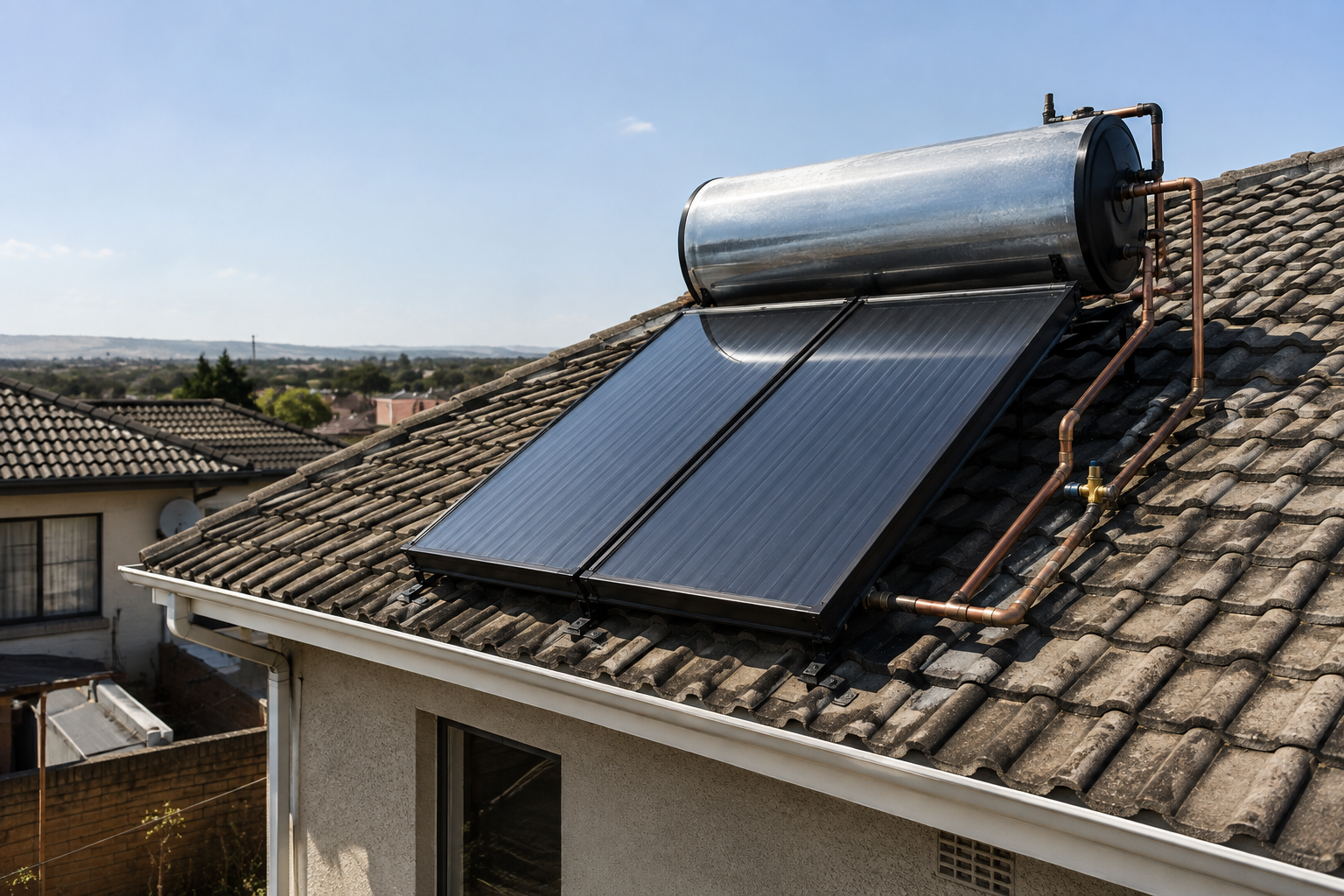
Switching to a solar geyser is one of the most effective ways to reduce household electricity consumption. With electricity prices continuing to rise and power interruptions remaining a reality for many homeowners, investing in a solar water heating system has become more than just an environmentally friendly decision. For many families, it’s a practical way to reduce monthly expenses while ensuring a reliable supply of hot water.
The first question most homeowners ask, however, is how much a solar geyser installation costs. The answer depends on far more than the price of the geyser itself. The size of the system, the type of solar geyser, the roof structure, plumbing modifications and installation requirements all contribute to the final cost.
Although a solar geyser requires a larger upfront investment than a conventional electric geyser, many homeowners recover that investment through reduced electricity costs over the years. Understanding what you’re paying for and what influences installation costs will help you make a confident and informed decision.
Get a Solar Geyser Installation Quote
Tell us about your property and we’ll recommend a solar water heating solution that suits your household and budget.
Average Solar Geyser Installation Costs in Roodepoort
Solar geyser installations vary considerably depending on the equipment selected and the complexity of the installation.
As a general guide, homeowners in Roodepoort can expect the following price ranges:
| Service | Typical Cost Range |
|---|---|
| Labour only | R5,000 – R12,000+ |
| 150L solar geyser supplied and installed | R22,000 – R35,000+ |
| 200L solar geyser supplied and installed | R28,000 – R45,000+ |
| Split solar geyser system | R30,000 – R55,000+ |
| Integrated solar geyser system | R22,000 – R40,000+ |
| Roof frame and mounting equipment | R2,000 – R8,000+ |
| Emergency replacement installation | Quoted on inspection |
These prices are intended as general estimates only. Every property is different, and the final quotation depends on the installation requirements, equipment chosen and the condition of the existing plumbing system.
Many homeowners compare quotations based only on price, but that can be misleading if one quote excludes essential items such as mounting brackets, plumbing alterations or commissioning.
What Are You Actually Paying For?
One of the biggest misconceptions is that most of the cost comes from the solar geyser itself.
In reality, the installation involves a complete hot water system rather than simply mounting a tank on the roof.
A professional installation includes supplying and positioning the solar collector or collectors, installing the geyser, connecting hot and cold water pipework, fitting mounting frames, insulating exposed pipework, connecting circulation lines where required, testing the plumbing system and commissioning the installation.
Depending on the property, additional work may also be required to strengthen roof supports, reroute existing plumbing or upgrade valves that no longer meet current installation standards.
This is why two neighbouring houses can receive very different quotations despite choosing similar solar geysers.
Why Installation Costs Differ Between Homes
This is probably the question homeowners ask most often after seeing online price estimates.
Every home presents its own installation challenges.
A single-storey property with an accessible tiled roof and existing plumbing close to the installation area is usually quicker to complete than a double-storey home with limited roof access.
Roof type also affects labour. Tile roofs, metal roofs and flat concrete roofs each require different mounting methods and safety procedures.
The distance between the solar collectors and the geyser can also influence costs. Longer pipe runs require additional materials, insulation and labour.
Some homes already have plumbing layouts that work well with a solar system. Others require significant modifications before the installation can even begin.
This is why a reputable plumbing company will usually recommend a site inspection before providing a final quotation.
Choosing the Right Solar Geyser Size
Choosing the correct size is just as important as choosing the right installer.
A system that’s too small may struggle to supply enough hot water during busy mornings, while an oversized system increases the initial investment without necessarily providing additional value.
The ideal size depends on several factors, including the number of occupants, the number of bathrooms and your family’s daily hot water usage.
A smaller household may find that a 150-litre system comfortably meets its needs. Larger families often benefit from 200-litre or even larger systems, particularly where multiple showers are used within a short period.
Rather than selecting the biggest system available, homeowners should choose a system that matches their actual hot water demand.
This usually provides the best balance between installation cost, efficiency and long-term savings.
Split vs Integrated Solar Geysers
One of the first decisions homeowners make is whether to install a split system or an integrated system.
An integrated system combines the storage tank and solar collector into one roof-mounted unit. These systems are generally simpler to install and often involve lower installation costs.
Split systems separate the storage tank from the solar collectors. The collectors remain on the roof while the geyser itself is installed elsewhere, often inside the roof space.
Although split systems usually cost more to install, they can offer aesthetic advantages because the storage tank remains hidden from view. They may also suit properties where roof loading or appearance is an important consideration.
The most suitable option depends on the property’s design, available roof space and the homeowner’s preferences.
Is a Solar Geyser Worth the Investment?
This is where many homeowners hesitate.
A solar geyser is a significant investment compared to replacing a conventional electric geyser, so it’s natural to question whether the savings justify the cost.
For many households, the answer is yes.
Water heating represents one of the largest contributors to household electricity consumption. By using energy from the sun instead of relying solely on electricity, many homeowners significantly reduce the amount of electricity required to heat water throughout the year.
While actual savings vary depending on household size and water usage, the reduction in electricity consumption can make a noticeable difference over time.
Beyond financial savings, solar geysers also provide greater resilience during power interruptions. Many systems include electrical backup elements, allowing hot water to remain available during periods of lower solar radiation while still reducing overall electricity usage.
Rather than viewing a solar geyser purely as an expense, many homeowners see it as a long-term investment in lower operating costs and improved energy independence.
Get a Solar Geyser Installation Quote
Tell us about your property and we’ll recommend a solar water heating solution that suits your household and budget.
Can You Convert an Existing Electric Geyser?
Many homeowners assume that installing a solar geyser means starting from scratch.
In some situations, existing plumbing infrastructure can be adapted to accommodate a solar water heating system. However, the amount of modification required depends on the age of the plumbing system, the property layout and the type of solar system being installed.
Professional installers will evaluate the existing pipework, valves and water supply before recommending the most suitable approach.
Although reusing parts of the existing plumbing may reduce installation costs in some cases, the primary goal should always be achieving a safe, efficient and reliable installation rather than simply minimising the upfront expense.
How Long Does Installation Take?
Most homeowners are surprised by how quickly a professionally planned solar geyser installation can be completed.
Straightforward installations can often be completed within a day, particularly where roof access is uncomplicated and the plumbing requires minimal modification.
Larger properties or installations requiring structural adjustments, additional pipework or electrical alterations may take longer.
Rather than focusing solely on speed, professional installers prioritise proper mounting, secure plumbing connections, leak testing and system commissioning.
Taking the time to complete these steps correctly helps maximise the lifespan and performance of the system.
Maintaining a Solar Geyser
A common misconception is that solar geysers require constant maintenance.
In reality, a quality system that has been professionally installed generally requires relatively little routine maintenance.
Periodic inspections help ensure that the collectors remain clean, pipe insulation remains intact and valves continue operating correctly.
Like any hot water system, occasional servicing helps identify minor issues before they develop into more expensive repairs.
Maintaining the system also helps preserve efficiency, ensuring the solar collectors continue transferring heat effectively throughout the year.
Mistakes Homeowners Should Avoid
One of the biggest mistakes is choosing an installer based solely on the lowest quotation.
A significantly cheaper installation may exclude important components or use lower-quality materials that reduce the lifespan of the system.
Another common mistake is selecting a system based only on price without considering household hot water demand. Installing an undersized system often leads to disappointment because it struggles to meet daily usage requirements.
Some homeowners also overlook the importance of roof suitability. The direction, angle and available space all influence how effectively the collectors capture solar energy.
Finally, delaying maintenance or ignoring small plumbing issues can reduce efficiency and shorten the lifespan of the installation.
Choosing experienced professionals and quality equipment usually delivers better long-term value than focusing only on the initial purchase price.
Why Professional Installation Matters
Solar geysers combine plumbing, structural mounting and specialised installation practices into one system.
Every connection must be completed correctly to ensure the system operates efficiently and safely for many years.
Professional installers understand how to position collectors for optimal solar exposure, secure mounting systems correctly, protect plumbing against heat loss and commission the system properly before it is placed into service.
The quality of the installation has a direct impact on the system’s efficiency, reliability and expected lifespan.
A well-installed solar geyser should continue providing dependable hot water for many years while helping reduce electricity costs throughout its lifetime.
Conclusion
The cost of installing a solar geyser in Roodepoort depends on the type of system, the size of the installation, the condition of the existing plumbing and the complexity of the work required.
While most complete installations typically range from R22,000 to R55,000 or more, the long-term reduction in electricity consumption makes solar water heating an attractive investment for many homeowners.
Choosing the right system, working with experienced installers and investing in quality equipment are all important steps towards getting the best value from your installation.
If you’re considering switching to solar hot water, obtaining a professional assessment is the best way to understand your options and receive an accurate quotation based on your property’s specific requirements.
Speak to a Solar Geyser Installation Specialist
Ready to reduce your electricity costs with a solar geyser? Complete the form below and we’ll help you choose the right system for your home.