
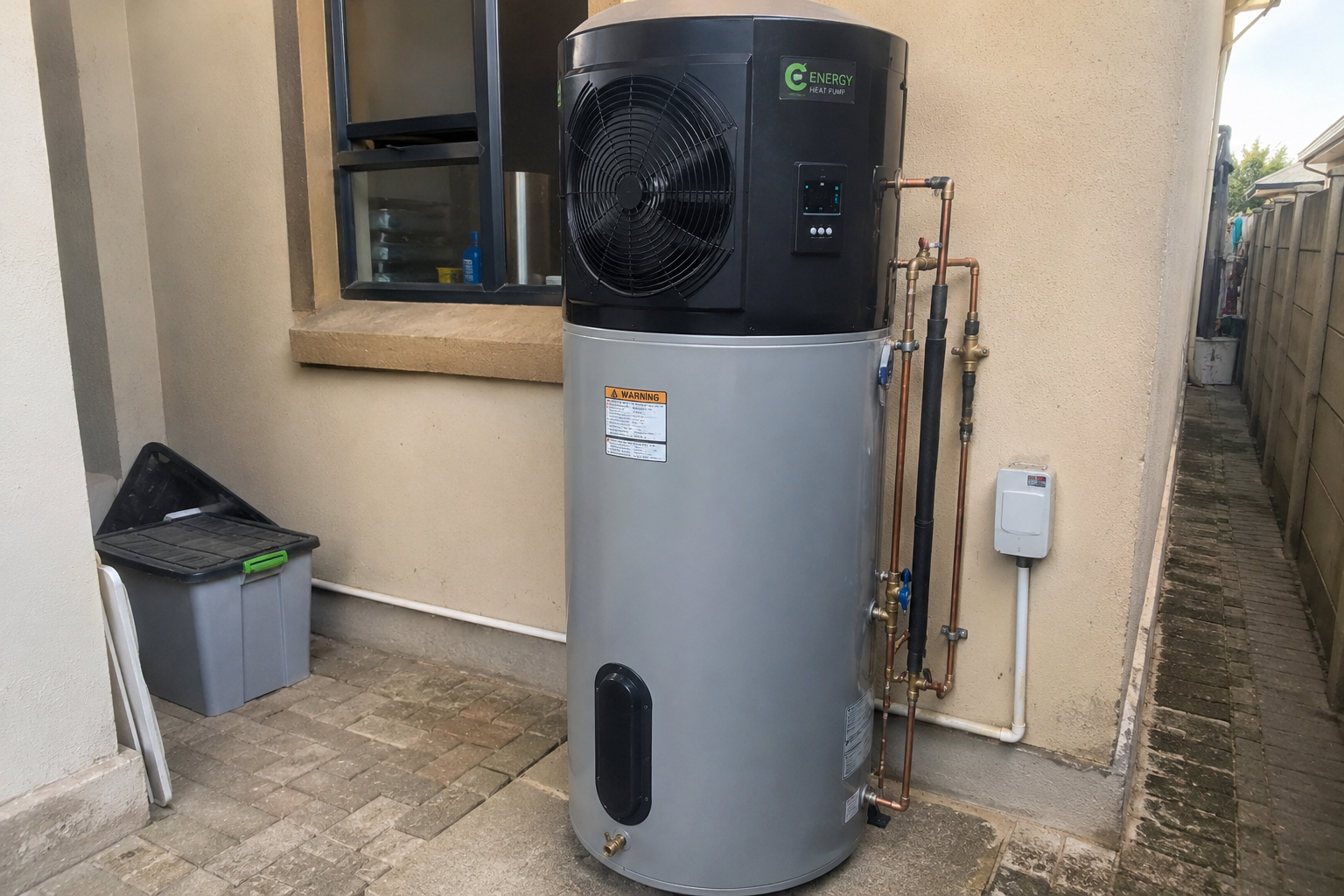
Keeping a household supplied with hot water accounts for a significant portion of monthly electricity consumption. As electricity prices continue to rise, many homeowners in Roodepoort are looking for alternatives that reduce energy costs without sacrificing comfort. One option that has become increasingly popular is installing a heat pump water heating system.
Unlike a conventional electric geyser that generates heat using an electrical element, a heat pump transfers heat from the surrounding air into the water. This process allows it to use considerably less electricity while still providing a reliable supply of hot water throughout the day.
Although the running costs are often much lower, installing a heat pump is a larger investment than replacing a standard electric geyser. Understanding what affects the installation cost and what is included in the price can help homeowners choose a system that delivers the best long-term value.
Get a Heat Pump Installation Quote
Tell us about your property and we’ll recommend the right heat pump system for your household.
Average Heat Pump Installation Costs in Roodepoort
The total cost of installing a heat pump depends on the size of the system, the complexity of the installation and whether existing plumbing can be reused.
As a general guide, homeowners in Roodepoort can expect the following price ranges:
| Service | Typical Cost Range |
|---|---|
| Heat pump installation (labour only) | R4,500 – R10,000+ |
| Heat pump supplied and installed | R22,000 – R45,000+ |
| Existing geyser conversion | R5,000 – R15,000+ |
| New plumbing alterations | R2,000 – R8,000+ |
| Electrical upgrades (where required) | Quoted on inspection |
| Emergency replacement installation | Quoted on inspection |
These prices are intended as estimates only. Every property is different, and the final cost depends on the equipment selected, the installation requirements and any additional plumbing or electrical work that may be needed.
A quotation that appears cheaper at first may not include all of the necessary installation components, making it important to compare what is included rather than focusing only on the total price.
Why Are More Homeowners Choosing Heat Pumps?
Heat pumps have become increasingly popular because they offer an effective balance between energy efficiency, convenience and long-term savings.
Unlike solar geysers, a heat pump does not rely on direct sunlight to operate. Instead, it extracts heat from the surrounding air, allowing it to produce hot water throughout the day and night.
For homeowners who want to reduce electricity consumption without installing roof-mounted collectors, a heat pump provides an attractive alternative.
Many households also prefer heat pumps because the installation generally has less visual impact than solar water heating systems while still providing significant energy savings over time.
As electricity costs continue to increase, more homeowners are viewing heat pumps as a long-term investment rather than simply another household appliance.
What Does a Heat Pump Installation Include?
Many people assume that installing a heat pump is simply a matter of replacing the existing geyser.
In reality, the installation involves several components working together to create an efficient hot water system.
A professional installation typically includes positioning the heat pump, connecting the plumbing system, installing insulated pipework where required, connecting the electrical supply, commissioning the system and thoroughly testing its operation.
Depending on the existing installation, plumbers may also need to replace valves, reroute plumbing, install mounting brackets or make adjustments to improve system efficiency.
Because every property is different, the exact scope of work varies from one installation to the next.
Why Do Installation Costs Vary?
One of the most common questions homeowners ask is why two quotations for a heat pump installation can differ by several thousand rand.
The answer lies in the complexity of the installation rather than simply the price of the heat pump itself.
Some properties already have plumbing layouts that make installation relatively straightforward.
Others require extensive pipework modifications before the new system can be connected.
The distance between the heat pump and the geyser also influences installation costs. Longer pipe runs require additional materials, insulation and labour.
Accessibility is another important consideration. Installing equipment in a spacious utility area is generally much easier than working inside confined roof spaces or areas with limited access.
The quality of the equipment also contributes to the overall cost. Premium heat pumps often include more advanced controls, quieter operation and longer warranties than entry-level models.
Can You Keep Your Existing Geyser?
In many situations, yes.
A heat pump is often installed alongside an existing hot water storage geyser rather than replacing it completely.
If the current geyser is still in good condition, it may be possible to integrate it into the new heat pump system.
This can reduce installation costs because the homeowner does not necessarily need to purchase a completely new hot water storage tank.
However, older geysers that show signs of corrosion, leaks or excessive wear may not be suitable for continued use.
A professional assessment will determine whether the existing geyser remains a good candidate for conversion.
Choosing the Right Heat Pump Size
Selecting the correct heat pump is essential for achieving good performance and energy efficiency.
A system that is too small may struggle to keep up with household demand during busy periods, while an oversized system can increase installation costs unnecessarily.
The ideal size depends on several factors, including the number of occupants, the number of bathrooms and the household’s daily hot water usage.
Larger families generally require higher-capacity systems capable of heating greater volumes of water throughout the day.
Choosing a system that closely matches actual household demand usually provides the best combination of performance, efficiency and long-term savings.
Get a Heat Pump Installation Quote
Tell us about your property and we’ll recommend the right heat pump system for your household.
Is a Heat Pump Better Than a Conventional Electric Geyser?
One of the biggest reasons homeowners choose heat pumps is their improved energy efficiency.
A traditional electric geyser generates heat directly using an electrical element. While effective, this process consumes a significant amount of electricity.
A heat pump works differently by transferring existing heat from the surrounding air into the water.
Because it moves heat rather than creating it, it generally requires much less electricity to produce the same amount of hot water.
For households with high daily hot water usage, this reduction in electricity consumption can translate into meaningful long-term savings.
The higher installation cost is therefore often viewed as an investment that gradually pays for itself through lower monthly electricity bills.
Is a Heat Pump Worth the Investment?
This is one of the first questions homeowners ask when comparing hot water systems.
The answer depends largely on your long-term plans for the property.
If you’re planning to remain in your home for several years, the ongoing reduction in electricity consumption can make a heat pump a worthwhile investment.
Unlike some home improvements that provide little financial return, a heat pump continues generating value every time hot water is used.
Many homeowners also appreciate the reduced environmental impact associated with lower electricity consumption.
Rather than focusing solely on the purchase price, it is often more useful to consider the total cost of ownership over the expected lifespan of the system.
How Long Does Installation Take?
Most standard heat pump installations can be completed within a single day.
However, installations involving plumbing alterations, electrical upgrades or equipment relocation may require additional time.
Professional installers focus on completing the work correctly rather than rushing the installation.
Every plumbing connection should be pressure tested, electrical components checked and the complete system commissioned before it is placed into operation.
Taking the time to install the system properly helps maximise both efficiency and reliability.
Maintaining a Heat Pump
Heat pumps require relatively little routine maintenance, but regular servicing helps ensure they continue operating efficiently.
Keeping the unit clean, inspecting pipe insulation and checking plumbing connections periodically can help prevent small issues from developing into larger problems.
Professional servicing also allows technicians to identify worn components before they fail.
Like any major household appliance, regular maintenance contributes to a longer lifespan and more reliable performance.
Common Mistakes to Avoid
Homeowners sometimes assume that every heat pump performs the same.
In reality, choosing equipment based purely on the lowest purchase price can lead to disappointment if the system does not meet the household’s hot water requirements.
Another common mistake is selecting a heat pump that is either too large or too small for the property.
Incorrect sizing affects both efficiency and operating costs.
Some homeowners also overlook the importance of professional installation.
Even a premium-quality heat pump cannot deliver its full potential if the plumbing, insulation or commissioning has been completed incorrectly.
Choosing experienced installers and quality equipment usually provides the best long-term value.
Conclusion
The cost of installing a heat pump in Roodepoort depends on several factors, including the equipment selected, installation complexity, plumbing modifications and the condition of the existing hot water system.
While complete installations generally range between R22,000 and R45,000 or more, many homeowners find that the reduction in electricity consumption makes the investment worthwhile over the long term.
If you’re considering upgrading your home’s hot water system, a professionally installed heat pump offers an efficient, reliable and energy-conscious solution that can continue delivering value for many years.
Speak to a Heat Pump Installation Specialist
Ready to make your hot water system more energy efficient? Complete the form below and we’ll help you choose the right heat pump installation for your home.