
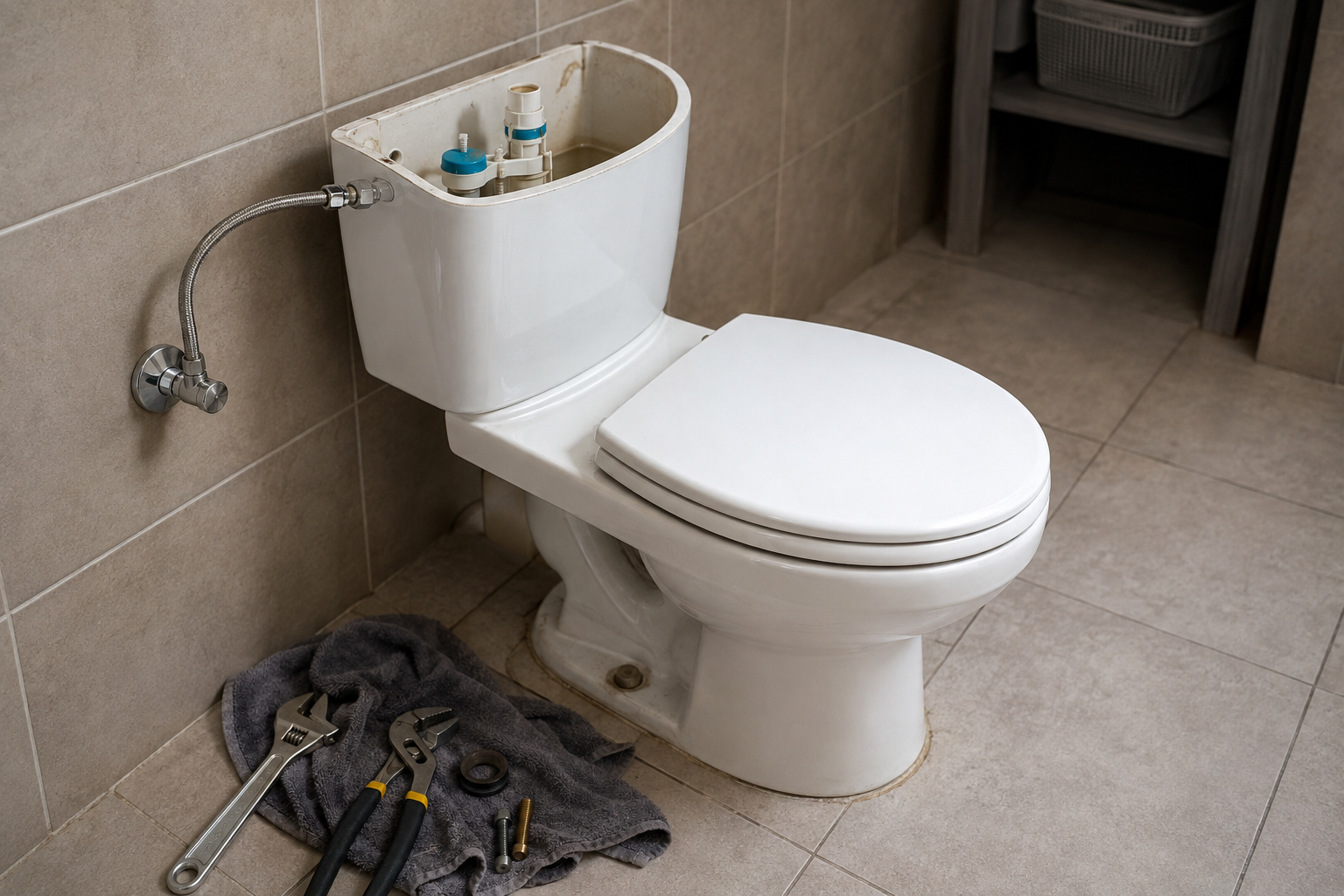
A faulty toilet is more than just an inconvenience. Whether it won’t flush properly, keeps running after every flush or is leaking onto your bathroom floor, even a small problem can quickly become frustrating and expensive if it’s left unattended.
Many homeowners only call a plumber once the toilet stops working completely, but most toilet problems begin as relatively minor faults that become worse over time. A continuously running toilet can waste hundreds of litres of water every day, while a small leak can damage flooring, walls and nearby cabinetry if it isn’t repaired promptly.
One of the first questions most homeowners ask is how much it will cost to repair a toilet. The answer depends on the type of problem, the parts that need replacing and whether the repair requires additional plumbing work.
In this guide, we’ll explain the average toilet repair costs in Roodepoort, the factors that influence pricing and why repairing toilet problems early is usually the most cost-effective solution.
Need a Toilet Repair Quote?
Is your toilet leaking, blocked or not flushing properly? Complete the form below and we’ll get back to you.
Average Toilet Repair Costs in Roodepoort
Toilet repairs can range from simple adjustments to more extensive plumbing work. While every repair is different, the table below provides a general idea of what homeowners in Roodepoort can expect to pay.
| Service | Typical Cost Range |
|---|---|
| Minor toilet repairs | R600 – R1,200 |
| Toilet cistern repairs | R800 – R2,000 |
| Toilet leak repairs | R800 – R2,500 |
| Toilet flush mechanism replacement | R900 – R2,500 |
| Toilet removal and refitting | R1,500 – R3,500+ |
| Emergency toilet repairs | R1,500 – R5,000+ |
These prices should only be used as a guide. The final cost will depend on the nature of the problem, the condition of the toilet and whether replacement parts are required.
In many cases, the toilet itself is not the issue. A worn valve, damaged seal or faulty flushing mechanism may be responsible for the problem, making repairs far more affordable than replacing the entire toilet.
What Affects the Cost of Toilet Repairs?
Not every toilet repair takes the same amount of time or requires the same level of work. Several factors determine the final price, and understanding them can help homeowners make sense of plumbing quotations.
The Type of Toilet Problem
The biggest factor influencing the cost of a repair is the nature of the fault.
A toilet that continues running after every flush is usually caused by a problem inside the cistern. These repairs are often relatively straightforward because the faulty component can be replaced without removing the toilet.
A leaking toilet, however, may require additional investigation. Water leaking around the base of the toilet could indicate a failed pan connector, worn seal or a problem with the waste connection beneath the fixture.
Blocked toilets also vary considerably. A simple blockage may be cleared quickly, while a blockage deeper within the drainage system may require more extensive work.
The more complex the problem, the more labour and materials are generally required to complete the repair.
Replacement Parts
Many toilet repairs involve replacing worn internal components rather than the toilet itself.
Over time, moving parts inside the cistern naturally wear out through regular use. Rubber seals become brittle, valves stop sealing properly and flushing mechanisms eventually fail.
Fortunately, these components can often be replaced without replacing the entire toilet.
The quality of replacement parts also influences pricing. While cheaper components may reduce the initial repair cost, higher-quality parts generally provide better reliability and a longer service life.
A professional plumber will usually recommend components that offer the best balance between durability and value.
Labour Requirements
Labour is another important factor affecting repair costs.
Some toilet repairs can be completed within an hour, while others require considerably more time.
If the toilet needs to be removed to access damaged pipework or replace hidden seals, labour costs may increase because of the additional work involved.
Likewise, repairs involving older plumbing systems sometimes require extra care, particularly where existing fittings have become corroded or difficult to remove.
Choosing an experienced plumber can often reduce repair time because the problem is diagnosed accurately and repaired correctly the first time.
Accessibility
Accessibility also plays a role in pricing.
Most toilets are installed in areas where plumbers have easy access to the cistern, supply pipe and waste connection. However, certain bathroom layouts can make repairs more challenging.
Built-in cisterns, concealed plumbing and limited working space can increase the time required to complete repairs.
While these situations are less common, they can affect the overall quotation.
Common Toilet Problems That Require Repairs
Toilets are used every day, which means components naturally wear over time.
One of the most common issues is a toilet that continues running after it has been flushed. This usually happens because water continues flowing into the bowl instead of stopping once the cistern has refilled. Besides being annoying, this problem can waste a significant amount of water and increase your monthly municipal bill.
Another common problem is weak flushing. If the toilet struggles to clear waste or requires multiple flushes, the issue could be related to the flushing mechanism, water level inside the cistern or an obstruction within the plumbing system.
Leaks are another frequent reason homeowners call a plumber. Some leaks occur around the base of the toilet, while others develop where the water supply connects to the cistern. Although these leaks may appear minor at first, they can gradually damage flooring and create ideal conditions for mould growth if ignored.
Toilet blockages are also extremely common. While some minor blockages can be cleared easily, recurring blockages often indicate a larger problem within the drainage system that should be professionally investigated.
Understanding these common issues allows homeowners to act early before repairs become more extensive and expensive.
Is It Better to Repair or Replace a Toilet?
Many homeowners assume that once a toilet develops problems, replacing it is the only solution.
In reality, most toilet faults can be repaired without replacing the fixture.
If the toilet bowl and cistern are still in good condition, replacing worn internal components is often the most economical option. Flush valves, fill valves, seals and flushing mechanisms are designed to be replaced as they wear out.
Replacement generally becomes the better option when the toilet itself has developed structural damage.
Cracked porcelain, repeated leaks caused by age or multiple recurring repairs may indicate that replacing the entire toilet will provide better long-term value.
The age of the toilet should also be considered. Older toilets may use more water than newer models, meaning replacement could improve water efficiency while reducing future maintenance requirements.
A professional inspection can help determine whether repair or replacement offers the better investment for your particular situation.
Can a Faulty Toilet Increase Your Water Bill?
Many homeowners don’t realise just how much water a faulty toilet can waste.
A toilet that continues running after every flush may seem like a small issue, but it can allow clean water to flow continuously into the bowl throughout the day.
Over weeks or months, this constant water loss can result in a noticeable increase in your municipal water account.
Even a slow leak that isn’t immediately visible can waste thousands of litres of water each month.
If you’ve noticed your water bill increasing unexpectedly without any obvious explanation, your toilet may be one of the first places worth checking.
Repairing the problem early is often far less expensive than continuing to pay for wasted water.
Get Your Toilet Repaired by a Professional
Tell us what’s wrong with your toilet and we’ll help you find the right solution.
Signs Your Toilet Needs Professional Repair
Some toilet problems are obvious, while others develop gradually over time. Recognising the warning signs early can help you avoid more extensive repairs and unnecessary water damage.
One of the clearest signs is a toilet that constantly runs after flushing. If you can hear water flowing long after the cistern should have filled, there is likely a problem with one of the internal components. Although this may seem like a minor inconvenience, it can waste a significant amount of water every day.
Water pooling around the base of the toilet is another warning sign that should never be ignored. This could indicate a worn pan seal, a loose connection or damage to the toilet itself. Even a small amount of water can eventually damage flooring and encourage mould growth if the problem isn’t addressed.
A weak or incomplete flush is also worth investigating. If the toilet struggles to remove waste or requires multiple flushes, there may be a fault with the flushing mechanism, an issue inside the cistern or the early stages of a blockage within the drainage system.
Homeowners should also pay attention to unusual sounds. Gurgling noises, vibrations after flushing or constantly refilling cisterns often indicate that something isn’t working as it should.
Ignoring these warning signs rarely saves money. In most cases, toilet problems become more expensive the longer they are left unresolved.
Why Emergency Toilet Repairs Cost More
Not every toilet repair can wait until the next available appointment.
A toilet that is overflowing, leaking heavily or completely unusable can quickly become an emergency, particularly in homes with only one bathroom or in commercial properties where facilities need to remain operational.
Emergency plumbing services generally cost more because plumbers are required to respond outside normal business hours, often during evenings, weekends or public holidays.
Emergency toilet repairs in Roodepoort typically range from R1,500 to R5,000 or more, depending on the severity of the problem and the work required.
While some homeowners hesitate because of the additional cost, delaying emergency repairs can often result in even greater expenses. Continuous leaks can damage flooring, walls and nearby cabinetry, while overflowing toilets can create hygiene concerns and disrupt normal household activities.
Acting quickly often prevents further damage and helps keep the overall repair costs lower.
How Long Does a Toilet Repair Take?
One of the most common questions homeowners ask is how long a toilet repair will take.
The answer depends on the type of repair and whether replacement parts are readily available.
Simple repairs involving internal cistern components can often be completed within an hour. Replacing a faulty fill valve, flush valve or rubber seal is usually a straightforward process for an experienced plumber.
Repairs involving leaks around the base of the toilet may take longer because the toilet often needs to be removed before damaged seals or connectors can be replaced.
More complex repairs involving hidden plumbing issues or drainage problems can require additional time, particularly if further investigation is needed.
In most cases, homeowners can expect common toilet repairs to be completed on the same day, allowing normal use of the bathroom to resume as quickly as possible.
Can You Repair a Toilet Yourself?
Many homeowners consider repairing a toilet themselves, particularly when the problem appears to be minor.
While replacing a toilet seat or tightening a loose fitting may be manageable for someone with basic DIY skills, more complex plumbing repairs are generally best left to a qualified plumber.
Modern toilets contain several components that must work together correctly to operate efficiently. Installing the wrong part or making incorrect adjustments can lead to leaks, poor flushing performance or ongoing water wastage.
DIY repairs can also make diagnosing the original problem more difficult if additional damage occurs during the process.
If you’re unsure about the cause of the problem or don’t have the correct replacement parts, calling a professional plumber is usually the safest and most cost-effective solution.
How to Prevent Future Toilet Repairs
Although some wear and tear is unavoidable, good maintenance habits can help reduce the likelihood of unexpected toilet repairs.
Many common toilet problems are caused by misuse rather than normal ageing.
Avoid flushing items that are not designed to break down in the drainage system. Wet wipes, paper towels, sanitary products, cotton buds and other household items can contribute to blockages and place unnecessary strain on your plumbing.
It’s also worth paying attention to small changes in how your toilet operates. A toilet that begins flushing differently, makes unusual noises or develops a slow leak is often giving early warning that something needs attention.
Regular plumbing inspections can also help identify worn components before they fail completely.
Homeowners who deal with small plumbing issues promptly usually spend far less on repairs than those who wait until a major failure occurs.
Why Professional Toilet Repairs Are Worth the Cost
When comparing repair costs, it’s easy to focus only on the price of the job. However, the value of a professional repair extends beyond replacing a faulty component.
An experienced plumber will identify the underlying cause of the problem rather than simply fixing the visible symptom.
For example, a toilet that keeps blocking may not actually have a fault with the toilet itself. The issue could lie within the drainage system, damaged pipework or poor installation. Repairing only the symptom would result in the same problem returning.
Professional plumbers also use quality replacement parts designed to provide reliable, long-term performance.
While cheaper repairs may seem attractive initially, poor workmanship or low-quality components often lead to repeated failures and additional costs.
Choosing a reputable plumber gives homeowners confidence that the repair has been completed correctly and that the toilet will continue operating reliably.
Conclusion
The cost of toilet repairs in Roodepoort depends on the type of problem, the replacement parts required, labour involved and whether the repair is needed as an emergency.
While many common toilet repairs typically range between R600 and R2,500, more complex plumbing issues or emergency call-outs can cost more. Understanding what affects pricing allows homeowners to budget more effectively and make informed decisions when seeking professional assistance.
Most importantly, toilet problems should never be ignored. A constantly running toilet, hidden leak or recurring blockage may seem minor today, but delaying repairs can result in higher water bills, property damage and more expensive plumbing work in the future.
Whether your toilet is leaking, not flushing properly or showing signs of wear, arranging a professional assessment early can often save both time and money while ensuring your bathroom continues to function as it should.
Speak to a Toilet Repair Specialist
Need a reliable plumber in Roodepoort? Complete the form below and we’ll be in touch.